
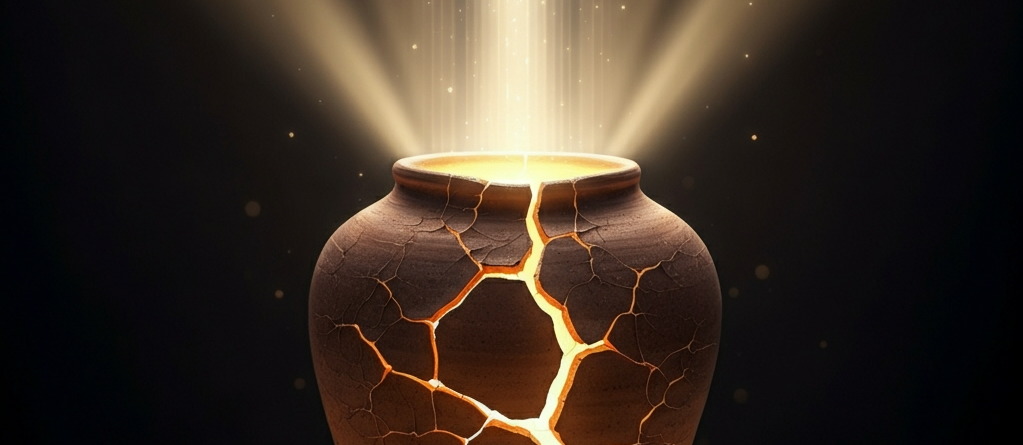
In our walk with God, we often encounter truths that seem to contradict our natural understanding—paradoxes that stretch our faith and transform our perspective. We’re called to be both broken and whole, weak yet strong, dying yet fully alive. These apparent contradictions aren’t flaws in our faith journey—they are the very furnace where our character is forged and our trust in God deepens.
One of the most profound truths we can grasp is that God’s strength is made perfect in our weakness. This isn’t just a comforting platitude; it’s a transformative principle that can revolutionise our walk with God. The Apostle Paul, a pillar of the early church, came to this realisation and declared, “I will boast in my weaknesses.” Why? Because he discovered that in those places of vulnerability and inadequacy, he encountered the strength of God in remarkable ways.
We often try to present our best selves to God and to others, hiding our flaws and struggles. But what if our weaknesses are actually invitations to experience God’s power in a deeper way? What if the areas where we feel most inadequate are precisely where God wants to display His strength?
Consider the biblical examples of broken people whom God used mightily:
Joseph, betrayed by his brothers and falsely imprisoned, became a leader who saved nations.
Elijah, discouraged and hiding under a broom tree, was recommissioned by God for further ministry.
Peter, who denied Christ three times, became the rock upon which the early church was built.
These stories remind us that God doesn’t discard broken things; He uses them. Just as bread must be broken to feed a multitude, our brokenness can become the means through which God’s power flows to others.
But here’s a crucial distinction we must understand: God wants us broken-willed, not broken-spirited. He doesn’t desire for us to be crushed, defeated, or without hope. Rather, He seeks to break our self-will, our independence from Him, and our stubborn reliance on our own strength. It’s in this surrender that we find true power.
Consider the words of King David in Psalm 51:17: “The sacrifices of God are a broken spirit, a broken and contrite heart—these, O God, You will not despise.” This brokenness isn’t about being shattered beyond repair; it’s about being yielded and humble before God.
Jesus Himself modelled this in the Garden of Gethsemane when He prayed, “Nevertheless, not My will, but Yours, be done.” His willingness to surrender His will to the Father’s plan opened the way for the greatest display of God’s power in history—the resurrection.
But here’s the beautiful part: we don’t have to wait for life to break us. We can choose to surrender voluntarily. We can recognise our inadequacy, the holiness of God, and the destructive nature of sin without having to hit rock bottom first. This chosen weakness, this voluntary submission, is actually the highest form of strength. It aligns us with God’s power and opens the floodgates of His grace in our lives.
The goal isn’t to remain in a state of weakness, however. God’s desire is to raise us up as mature sons and daughters, strong in His strength, wise in His wisdom, dependent on His power. As Paul writes in Romans 8:18-19, “For I consider that the sufferings of this present time are not worthy to be compared with the glory which shall be revealed in us. For the earnest expectation of the creation eagerly waits for the revealing of the sons of God.”
Our current struggles, our weaknesses, and our brokenness are the birth pangs of something greater. They’re preparing us for a full expression of Christ-likeness. All of creation is waiting, not for weak, broken versions of ourselves, but for revealed, matured sons and daughters of God.
This transformation happens as we allow the Spirit of God’s Son to dwell in our hearts. Galatians 4:6-7 tells us, “And because you are sons, God has sent forth the Spirit of His Son into your hearts, crying out, ‘Abba, Father!’ Therefore, you are no longer a slave but a son, and if a son, then an heir of God through Christ.”
This is the heart of the matter: sonship is our true identity. We’re not defined by our weaknesses or our accomplishments, but by who we are in Christ. This secure identity as God’s children then enables us to serve others from a place of strength, not insecurity or striving.
Remember the story of Jesus washing His disciples’ feet? He was able to take on the role of a servant precisely because He was secure in His identity as God’s Son. True servanthood flows from secure sonship, not from a place of trying to earn God’s favour or prove our worth.
As we embrace this truth, we find that our weaknesses no longer disqualify us. Instead, they become the very platforms from which God’s grace can shine most brightly. We learn to be “weak without being weak”—acknowledging our limitations while standing firm in the strength God provides.
So, let’s not wait for life to break us. Let’s choose to humble ourselves before God, to read His Word not just for information but for transformation. Let’s identify those areas in our lives where we’ve resisted God’s will, where we’ve relied on our own strength, and voluntarily surrender them to Him.
As we do, we can look forward with hope and expectation to the glory that will be revealed in us. We can trust that every trial, every weakness, every moment of brokenness is being used by God to shape us into the image of His Son.
May we have the courage to be weak in ourselves, that we might be strong in Him. May we embrace the paradox of the Christian life—that it’s in losing ourselves that we truly find who we were meant to be. And may we live as sons and daughters who know that our present sufferings cannot compare to the glory that awaits us.


