There is a kind of exhaustion that sleep cannot fix. It is the weariness that comes from striving, from trying to hold everything together, from carrying burdens that were never yours to carry in the first place. Most of us know this feeling intimately. And most of us, if we are honest, have carried it even as believers, even as people who say we trust God.
But what if there is a rest available to you that goes deeper than any relief the world can offer? What if that rest is not a destination you arrive at through effort, but a posture of the heart that becomes possible the moment you truly understand what Jesus did on the cross?
The Rest God Always Intended
The book of Hebrews speaks about a rest that God has always wanted His people to enter. In Hebrews 4, the writer describes this rest and then says something that sounds almost contradictory at first: we must strive to enter it. How can you strive for rest? It sounds like telling someone to fight their way into a nap.
But the striving the writer describes is not the striving of self-effort. It is the striving of belief. It is the earnest, diligent, wholehearted act of trusting God rather than trusting yourself. The fight is not to do more. The fight is to believe more fully. To stop relying on your own understanding, your own strategies, your own ability to manage outcomes, and to instead place the full weight of your life on what Christ has already accomplished.
The Israelites in the wilderness are a sobering example. They saw miracle after miracle. They walked through the Red Sea on dry ground. They ate bread that fell from the sky. And yet they could not enter God’s rest because they hardened their hearts. They refused to trust. They kept turning back to their own ways. The rest was available to them. They simply would not receive it.
The question worth sitting with is this: in what ways might we be doing the same thing?
Peace and Rest Are Not the Same Thing
There is an important distinction worth drawing here. Peace is something we receive in Christ. When we are justified by faith, as Romans 5 describes, we have peace with God. The hostility that existed between us and God because of sin has been dealt with entirely. That is a settled reality, not a feeling that comes and goes.
Rest, on the other hand, is how we respond to that peace. Rest is the posture of the heart. It is choosing, moment by moment, to trust God’s character, His promises, and His finished work rather than reaching for our own strength. You can have peace with God and still not be living from a place of rest. Many believers do exactly that. They are reconciled to God but still striving as though they are not.
Isaiah 26 describes it beautifully: God keeps in perfect peace the one whose mind is stayed on Him, because that person trusts Him. The peace is connected directly to where the mind rests. And Philippians 4 echoes this, promising that when we bring our anxieties to God in prayer with thanksgiving, the peace of God, which surpasses all understanding, will guard our hearts and minds in Christ Jesus.
The guard is not our own willpower. The guard is His peace.
Getting a Fresh Revelation of the Cross
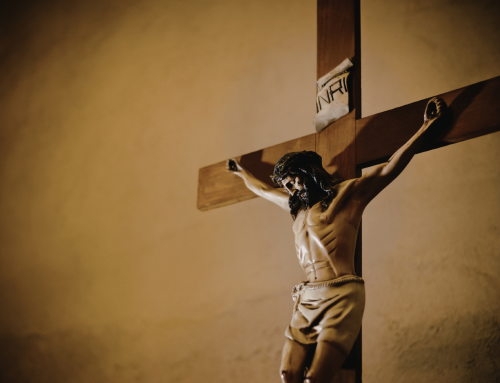
At the center of all of this is a question that deserves more than a quick answer: do we truly understand what Jesus did on the cross?
We say we believe it. We have heard it hundreds of times. But familiarity can be the enemy of wonder. It is possible to know the facts of the crucifixion without being undone by them. It is possible to nod at the theology without being transformed by it.
Paul, writing to the Corinthians, said he resolved to know nothing among them except Christ Jesus and Him crucified. This was not a simplistic statement from a man who lacked theological depth. Paul was one of the most brilliant minds in the early church. His resolve was a deliberate choice to keep returning to the cross as the center of everything, because he understood that the cross is where the power is.
Hebrews 10 tells us that after Christ offered a single sacrifice for sins for all time, He sat down at the right hand of God. He sat down. The work was finished. There was nothing left to add. And remarkably, Ephesians 2 tells us that we have been raised up with Him and seated with Him in heavenly places. His rest becomes our rest. His finished work becomes the foundation on which we stand.
This is not abstract theology. It is the most practical truth imaginable. If the work is finished, then you do not have to finish it. If the victory is won, then you do not have to win it. If He sat down, then you can stop running yourself ragged trying to earn what has already been freely given.
A Heart That Stays Surrendered
Psalm 139 records David asking God to search him, to try him, to see if there is any grievous way in him. This is the prayer of a surrendered heart. Not a heart that has everything figured out, but a heart that stays open, stays soft, stays willing to be examined and redirected.
The word of God, as Hebrews 4 describes, is living and active, sharper than any two-edged sword. It discerns the thoughts and intentions of the heart. When we read Scripture and something stings, that is not an accident. That is the word doing its work, cutting through the layers we have built up, getting to the places that still need to be surrendered.
A surrendered heart is not a passive heart. It is an active, trusting, obedient heart that moves from a place of rest rather than fear. It obeys because it trusts, not because it is striving to earn something.
Come back to the cross. Let it become real again. Let the weight of what He did land on you freshly. Because from that place, everything changes. From that place, rest is not just possible. It is the most natural thing in the world.