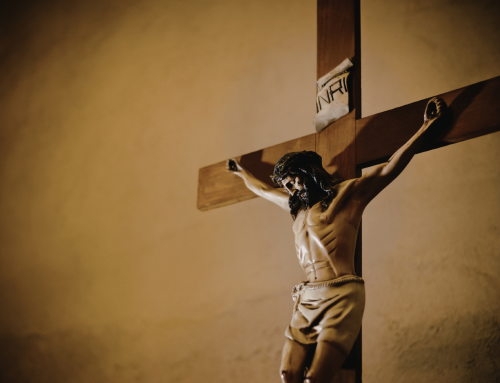
There is a question worth sitting with: Why did the Apostle Paul, a man of extraordinary intellect and education, decide that the one thing he would be known for proclaiming was Christ crucified? He had access to the great philosophical traditions of his age. He could have impressed the Corinthians with sophisticated arguments and rhetorical brilliance. Instead, he planted his flag at the foot of the cross and refused to move.
In 1 Corinthians 2:2, Paul writes that he decided to know nothing among his audience except Jesus Christ and Him crucified. The Greek behind that verse is striking — it is not passive. Paul judged, he determined, he resolved. This was a deliberate choice made in full awareness of what it would cost him in terms of cultural credibility.
And that cost was real. The Corinthians admired Greek wisdom and philosophical debate. The cross was not intellectually fashionable. To the Greeks, it was foolishness. To the Jewish community, it was a scandal. Yet Paul declared in 1 Corinthians 1:18 that the message of the cross is the power of God to those who are being saved. He was not embarrassed by it. He was anchored to it.
That same tension exists today. We live in an age that exalts human reasoning, self-improvement, and intellectual sophistication. The temptation for the church is to soften the message of the cross, to make it more palatable, to lead with everything except the part about suffering, sacrifice, and death. But Paul’s resolve stands as a challenge to every generation: everything must be centred on Christ and the cross.
The Cross as Revelation
The cross is not merely something Jesus accomplished. It is the ultimate revelation of who He is. When Jesus hung on that cross, He was not simply completing a transaction. He was unveiling the character of God — His love, His righteousness, His humility, and His glory.
Philippians 2:5-8 describes how Christ, though equal with God, did not cling to that equality. He emptied Himself, took the form of a servant, and became obedient to the point of death — even death on a cross. This is not a portrait of weakness. This is the most staggering display of strength and love the universe has ever witnessed.
John 14:9 reminds us that to see Jesus is to see the Father. And if that is true, then to look at the crucified Christ is to see the very heart of God laid bare.
A Saviour Who Kept His Wounds
One of the most profound mysteries surrounding the cross is what Jesus chose to carry into eternity. When He rose from the dead, He did not appear with a glorified body that had erased all evidence of suffering. In John 20:20, He showed His disciples His hands and His side. In Luke 24:38-40, He invited them to look and touch, to see that the wounds were real.
Jesus kept His wounds. Resurrection power and divine glory are eternally linked to the cross.
There is something deeply important here for those who are suffering. Western Christianity has often been drawn to a version of Jesus that is triumphant without being wounded, victorious without scars. But the risen Christ is a scarred Christ. And that means our own wounds do not disqualify us from His presence — they may, in fact, be the very places where His presence is most keenly felt.
Pain can develop into compassion. Trials can develop perseverance, as James 1:2-4 teaches. Forgiveness can break the power of resentment. Surrender can soften a hardened heart. The wounds we carry, when brought to the cross, do not have to be the end of the story.
Why the Messiah Had to Suffer
On the road to Emmaus, two devastated disciples walked away from Jerusalem, their hopes shattered. They had believed Jesus was the one who would redeem Israel. His crucifixion had looked like catastrophic failure. Then Jesus, walking alongside them unrecognized, opened the Scriptures and asked a question that reframed everything: “Did not the Messiah have to suffer these things and then enter his glory?” (Luke 24:26, NIV).
Their grief was not wrong. Their hope had been genuine. But their understanding of how God works was incomplete. Isaiah 53 had foretold it all — that He would be pierced for our transgressions, crushed for our iniquities, and that by His wounds we would be healed. The cross was not a deviation from God’s plan. It was the plan.
And the deepest mystery of Calvary is not simply that a man suffered there. It is who suffered there. The One hanging on that cross was God manifested in human flesh. As Acts 20:28 states, the church was purchased with His own blood. God did not send a substitute while remaining at a safe distance. He entered our suffering and died in our place.
The Power That Changes Everything
Paul declared in 1 Corinthians 1:18 that the message of the cross is the power of God. Not was — is. Present tense. Ongoing. The cross carries the power to save sinners, to defeat the enemy, to crucify pride, and to transform believers from the inside out.
In Galatians 3:1-3, Paul warned the church that turning away from the centrality of Christ crucified is a form of spiritual bewitchment. When the cross is no longer at the center, we drift back toward self-effort, performance, and religious striving. We begin trying to be perfected by the flesh after having begun by the Spirit.
Building on the Foundation
Hebrews 6:1 calls believers to move on toward maturity. But maturity does not mean leaving the cross behind. The cross is the foundation upon which the entire Christian life is built. The call is not to graduate beyond it but to go deeper into it — to move from knowing that Christ died for us, to actually living as people who have died with Him.
Galatians 2:20 captures it perfectly: “I have been crucified with Christ. It is no longer I who live, but Christ who lives in me.”
Paul saw philosophy. He saw debate. He saw human wisdom in all its forms. And he resolved to know one thing above all: Jesus Christ and Him crucified. That resolve is not a limitation. It is the very source of everything.